

Write down what you have noticed
Record when the problem began, which rooms are affected, whether it is constant and what the thermostat displays. Photograph accessible equipment labels and visible error messages without opening service panels. Include recent repairs, maintenance and changes in the home.
A short message is useful: 'The system is [model if known], the problem began [date], it affects [rooms or operation], and these are the observations and checks already made.' Do not guess a failed part or refrigerant level from a symptom.
- System make and model where accessible
- Thermostat display and any error message
- When the problem occurs and affected rooms
- Recent service and building changes
Discuss access before the appointment
Tell the company where the equipment is, how it is reached and any parking, building entry or appointment restrictions. Mention an attic, crawlspace, shared plant room or difficult route before booking. Let the contractor specify the safe access and working space needed for the actual equipment.
Move ordinary household obstructions only where you can do so safely, secure pets and arrange the relevant keys or building permission. Do not remove equipment panels, build temporary access platforms or enter unsafe spaces to prepare a visit. Send an accessible photograph if it helps explain the route.
Keep homeowner checks within the equipment instructions
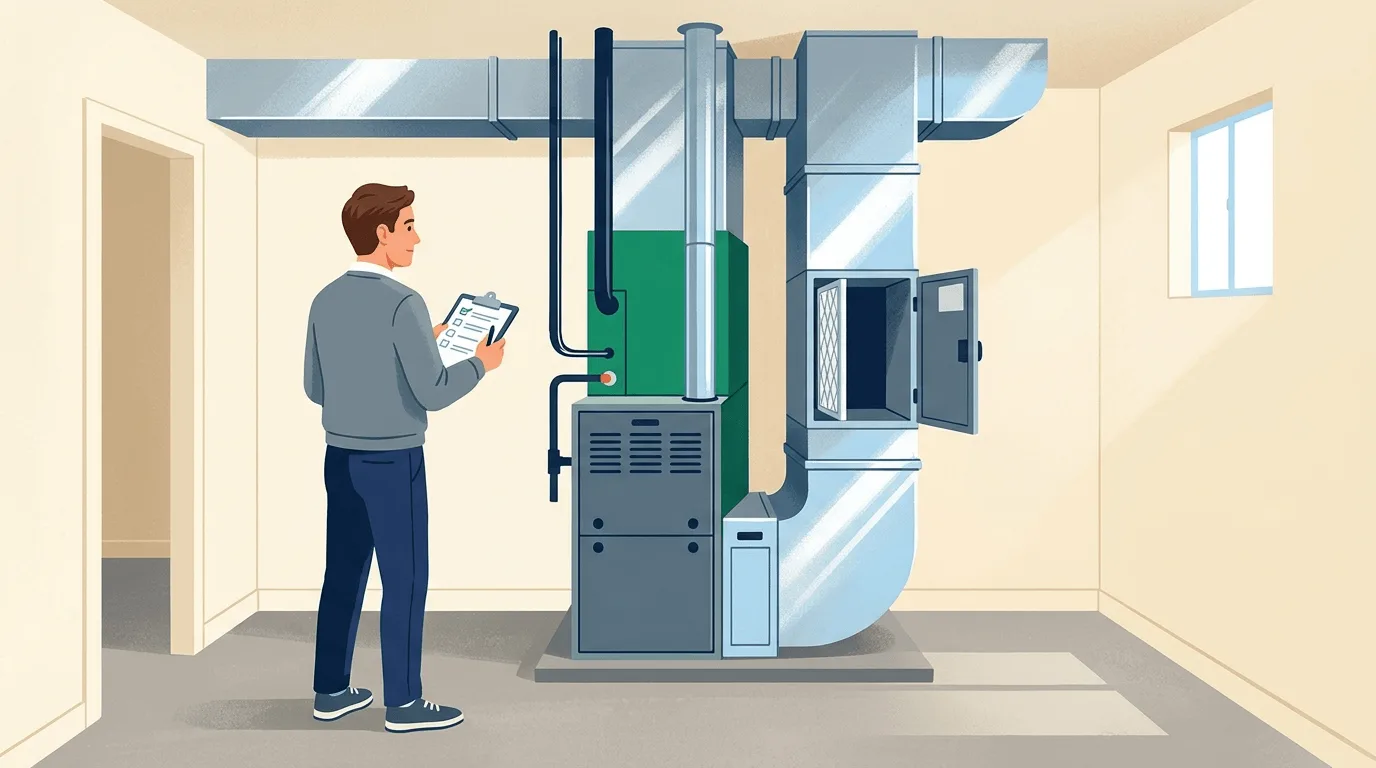
You can record ordinary thermostat settings and the condition of a homeowner-accessible filter if its instructions allow you to inspect it safely. Follow the equipment's shutdown and access guidance. Do not repeatedly reset a tripping breaker or open electrical or refrigerant components.
For an AC cooling problem, read safe observations before booking a repair. If you notice a potentially dangerous condition, stop using the equipment and seek appropriate help instead of waiting for the appointment. These preparations do not diagnose the fault remotely.
Confirm charges and how further work is approved
Ask for the visit or diagnostic charge, what it includes, whether it is credited towards repairs and how extra work is approved. Share your notes at the beginning and request a written finding and priced options before authorising additional work.
At completion, ask for the work record, replaced parts where relevant, invoice and applicable warranty terms. Keep any instructions and unresolved questions with the equipment information. Use the quote worksheet if a larger installation is proposed, or browse repair professionals.
Sources and review date
ENERGY STAR's hiring guidance supports preparing equipment and maintenance information and requesting written estimates. It was checked on 7 October 2026. Access and equipment-specific instructions must come from the provider and manufacturer; this guide does not publish universal clearance dimensions.