

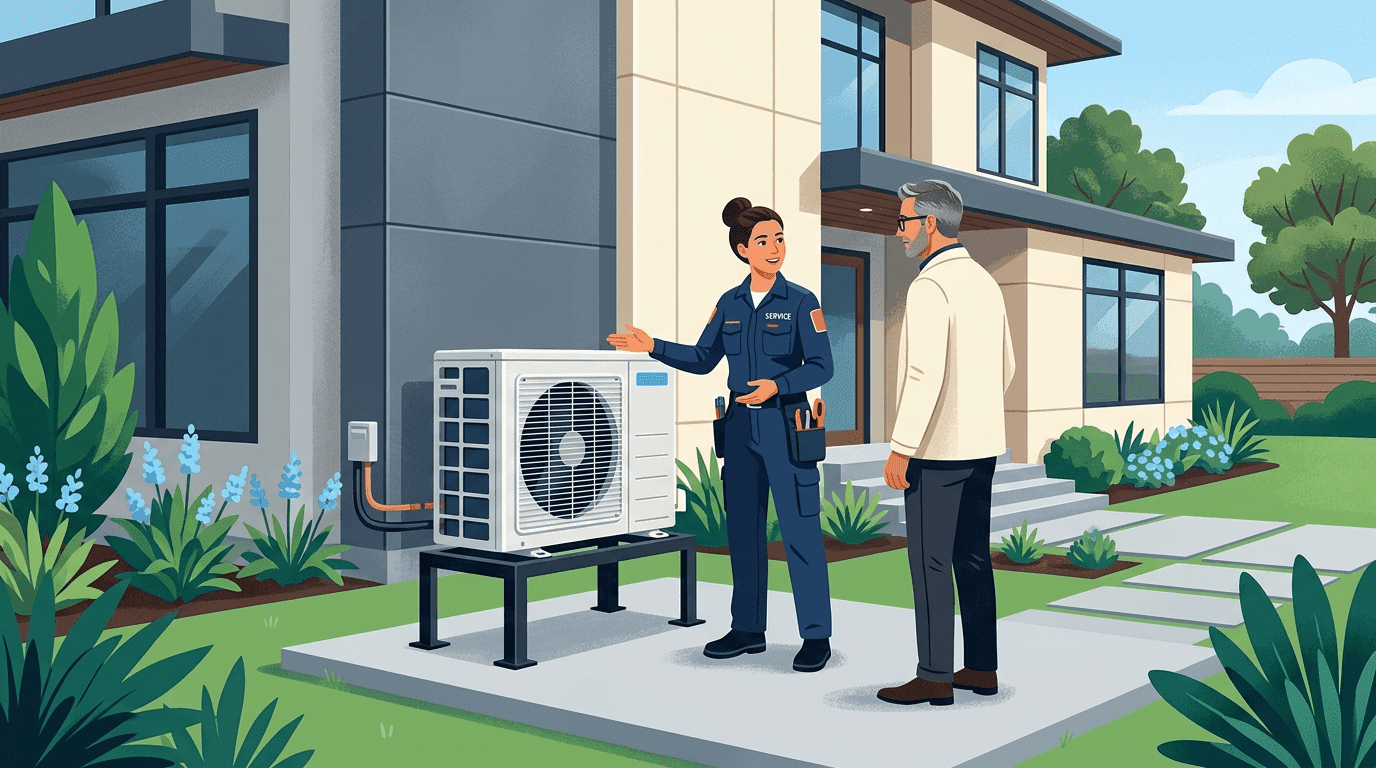
Understanding modern inverter heat pumps vs legacy systems
Heat pump technology has undergone a fundamental transformation over the past decade. Legacy single-stage heat pumps earned a poor reputation in cold climates because their heating capacity dropped sharply as outdoor temperatures fell below freezing, requiring expensive, drafty electric resistance heat strips to maintain warmth.
Modern cold-climate heat pumps employ variable-speed inverter-driven compressors and electronic expansion valves (EEVs) that modulate capacity seamlessly. Rather than operating at a fixed speed, inverter compressors speed up in sub-zero temperatures to extract heat energy from freezing outdoor air.
Certified cold-climate models maintain 100% heating capacity down to 5°F (-15°C) and continue delivering dependable heat down to -15°F (-26°C) or lower, making them viable whole-home heating solutions across the northern United States and Canada.
Evaluating cold-climate performance: NEEP ratings, COP, and balance points
When evaluating heat pumps, look beyond standard SEER2 cooling numbers and examine low-temperature heating performance. The Northeast Energy Efficiency Partnerships (NEEP) Cold Climate Air-Source Heat Pump listing provides verified third-party heating capacities and Coefficient of Performance (COP) ratings at 47°F, 17°F, and 5°F.
Coefficient of Performance (COP) measures thermodynamic efficiency: a COP of 2.5 means the system delivers 2.5 units of heat output for every 1 unit of electrical energy consumed. By comparison, electric baseboard heaters and resistance heat strips have a fixed COP of 1.0.
| System Architecture | Heating COP @ 5°F | Backup Heating Requirement | Ideal Climate Zone | Relative Initial Investment |
|---|---|---|---|---|
| Cold-Climate Inverter Heat Pump | 1.8 - 2.4 | None needed in modern homes (or small 5kW emergency strip) | Cold & Very Cold (Zones 5 - 7) | Moderate to High |
| Dual-Fuel Hybrid System | 1.6 - 2.0 (Heat pump stage) | Natural gas or propane condensing furnace | Cold climates with existing natural gas service | High |
| Standard Heat Pump (Non-Inverter) | 1.0 - 1.3 (Locks out below 25°F) | Mandatory 10kW - 15kW electric resistance heat strips | Moderate Southern (Zones 1 - 3) | Moderate |
| Ductless Multi-Zone Mini-Split | 2.0 - 2.8 | None required (hyper-heating outdoor units) | Homes without existing ductwork, additions, historic homes | Moderate to High |
Home infrastructure assessment: electrical panel, ductwork, and line sets
Before installing a heat pump, a contractor must evaluate your home's supporting electrical and mechanical infrastructure. Older homes with 100-amp electrical panels may require an electrical service upgrade to 200 amps if converting from natural gas to all-electric heat with auxiliary electric resistance backup.
Heat pumps also move larger volumes of moderately warm air (typically 95°F to 105°F supply temperatures) compared to gas furnaces (which deliver 130°F air at lower volume). As a result, heat pumps require between 350 and 450 CFM of airflow per ton of capacity. Existing ductwork must be assessed for static pressure to ensure return air registers are large enough to prevent restricted airflow.
Refrigerant Line Set Sizing and Elevation Rules
When retrofitting, reusing an existing refrigerant line set requires extreme care. Older R-22 systems used mineral oil, which is completely incompatible with the synthetic POE oils used in modern R-410A and next-generation A2L refrigerants (R-32, R-454B).
Installing a brand-new line set sized precisely to manufacturer diameter specifications is always best practice. If lines run through finished walls and cannot be replaced, the contractor must chemically flush the lines with approved solvent, pressure-test with dry nitrogen to 450 PSI, and pull a deep vacuum below 500 microns.
Navigating Inflation Reduction Act (IRA) 25C tax credits and utility rebates
Homeowners can significantly reduce installation costs by taking advantage of state and federal energy incentives. Under Section 25C of the Internal Revenue Code, qualifying cold-climate heat pumps are eligible for a federal tax credit of up to 30% of project costs, capped at $2,000 annually.
To qualify, the heat pump system must achieve specific Consortium for Energy Efficiency (CEE) Tier 1 or Tier 2 efficiency ratings and hold a verified AHRI certificate. Additionally, regional electric utilities frequently offer supplementary point-of-sale rebates ranging from $500 to over $3,000 for switching from fossil fuels to high-efficiency heat pumps.
- AHRI Certificate: Require your contractor to provide the official AHRI certificate number showing your matched equipment meets CEE Tier requirements.
- Utility Pre-Approval: Check your local electric utility's energy efficiency rebate portal before installation; some utilities require pre-approval audits.
- Documentation Retention: Keep the itemized contractor invoice, AHRI certificate, and commissioning startup sheet for federal tax filing.
Ten essential questions to ask your heat pump installer
Vet candidate installers using these technical screening questions during in-home assessments:
- What is the calculated thermal balance point of this system on my home? The balance point is the exact outdoor temperature where the heat pump's heating capacity matches your home's heat loss rate.
- Did you perform an ACCA Manual J calculation, and what design temperature did you use? Ensure calculations use the 99% winter design temperature established by ASHRAE for your specific geographic location.
- Does the outdoor unit include an automated basepan heater? A factory-installed basepan heater prevents defrost runoff water from refreezing into a solid block of ice at the bottom of the outdoor coil.
- What thermostat controls the system? Variable-speed inverter heat pumps require matched communicating thermostats to modulate compressor frequency effectively. Generic on/off thermostats cripple inverter efficiency.
- How will auxiliary backup heat be staged? Staging controls should lock out auxiliary electric heat strips until outdoor temperatures drop below the system's economic or thermal balance point.
Heat pump commissioning and winter operating best practices
Proper commissioning ensures long-term reliability. Technicians must weigh in the exact refrigerant charge using digital scales if line set lengths exceed factory pre-charged limits. Once installed, avoid aggressive nighttime thermostat setbacks. Heat pumps operate most efficiently when maintaining a constant, steady temperature ('set it and forget it') rather than repeatedly recovering from 5-degree setbacks.
Review our guide to comparing HVAC quotes to evaluate heat pump proposals side-by-side.